
A2P 10DLC Registration: A Plain Guide for Service Businesses
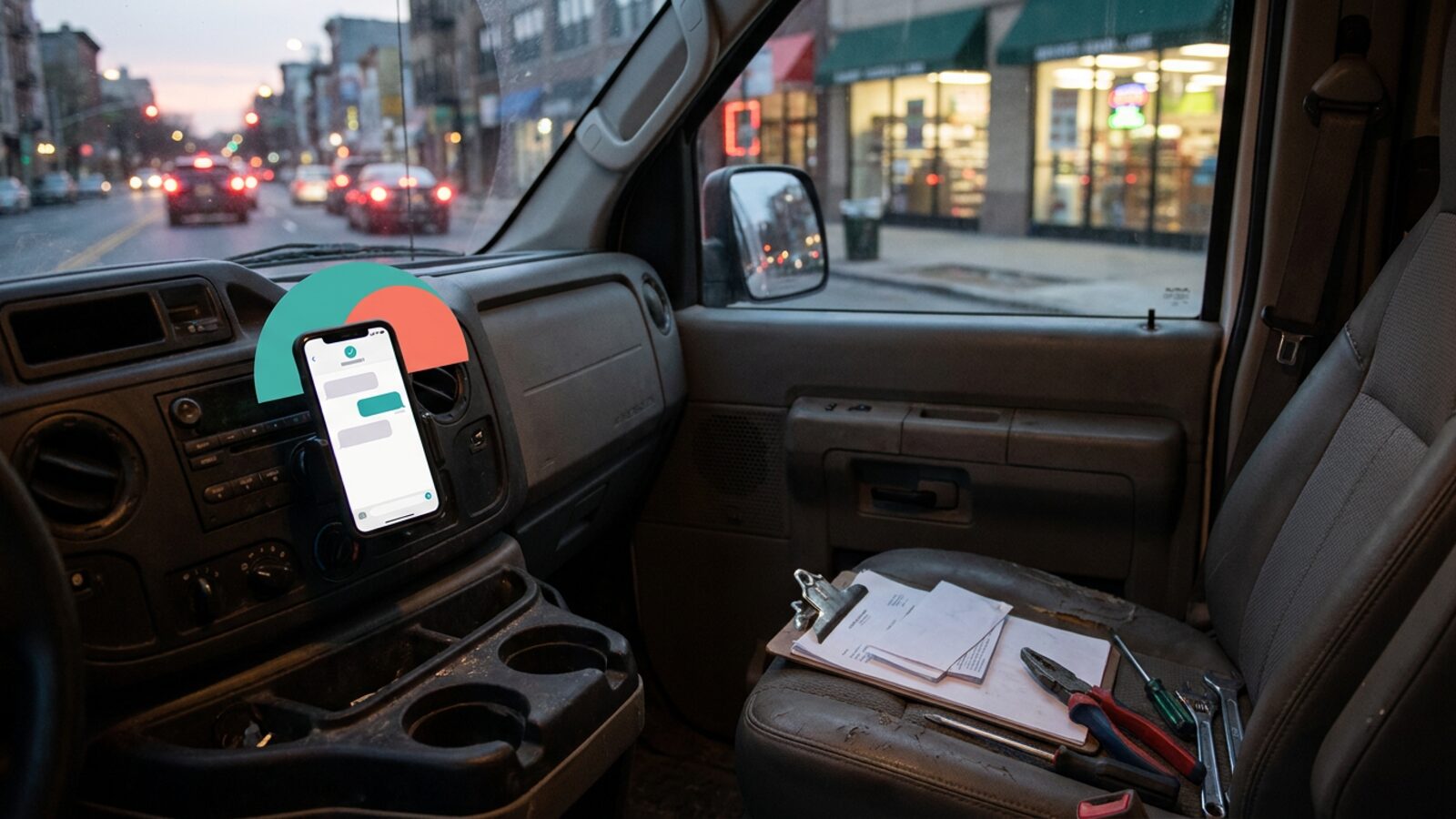
Your technician texts an on-my-way alert. Your software says delivered. The customer never sees it, waits at home, then calls the office annoyed. That gap between “sent” and “seen” is where unregistered business texting quietly costs you money.
Two sets of rules govern those messages. The federal robotext rules came first: since 11 April 2025, senders must accept an opt-out made by any reasonable means and process it within 10 business days. Miss that and the price is set by statute, at $500 per unlawful text and up to $1,500 per text when a court finds the violation willful. US carriers add a second layer, and it is the one that decides whether your message arrives at all. Business texts leaving a ten-digit local number have to be registered, brand and campaign, through The Campaign Registry (TCR) before carriers will deliver them reliably.
Where Unregistered Texting Breaks Down
The failures stack. Each one feeds the next, and the last one takes your texting channel off the table.
- Filtering you cannot see. Carriers watch traffic from ten-digit numbers. Unregistered appointment reminders get flagged and dropped. Your software reports a successful send. The phone never buzzes.
- Empty driveways. Customers who never got the confirmation forget the window or fail to prep the site. Your crew arrives, waits, and leaves. You eat the drive time and reschedule.
- A blocked number. Keep sending unregistered and carriers treat the number as a spam source. Once it is blocked, clearing it runs through your provider and takes time you do not have.
- Office staff back on the phones. Reminders and quote follow-ups stop landing, so someone starts dialing. That is payroll spent rebuilding what the software already did.
A2P vs P2P: Why Your Message Volume Does Not Matter
Carriers sort every text into one of two buckets. Person-to-person is two humans thumbing messages on phones. Application-to-person is software sending to a human.
If a CRM, scheduler, or dispatch tool sends the text, it is application-to-person. It does not matter that a live person typed it in the portal. The route makes the classification.
Small teams assume low volume keeps them out of scope. It does not. Fifty texts a month from a software platform sit under the same commercial messaging rules as fifty thousand.
What A2P 10DLC Registration Is, and Is Not
Registering your ten-digit long code is a carrier requirement, not a federal law. Mobile network operators built the system so they can tie commercial traffic to a real company and hold someone accountable for spam.
You declare who you are and what you plan to send. The Campaign Registry holds that record and shares it with the carriers.
You do not deal with the registry directly. You submit your details through your SMS provider, such as Twilio or Sinch, and they file it. Toll-free numbers sit outside this registry and run through their own verification path, so moving to a toll-free number changes the paperwork rather than removing it.
Registration does not guarantee delivery. It moves you out of the unregistered bucket and gives you the throughput carriers reserve for verified senders.
Step 1: Verify Your Legal Brand Identity
The first step establishes who is sending. Carriers match your company against tax records, so you supply your legal name, physical address, business type, and Employer Identification Number.
The data has to match exactly. A brand name that does not match the entity tied to your EIN fails the automated check.
This trips up anyone operating under a DBA. Use the legal name the IRS has, not the name painted on the trucks. Market under the DBA all you want; the registration wants the entity.
Step 2: Pick Your Campaign Use Case
Once your brand clears, you declare what the messages are for. That declaration is your campaign use case, and carriers sort commercial traffic into fixed categories.
Customer care, account notifications, and marketing are the common ones. A mixed use case covers several needs at once, which fits a shop sending HVAC dispatch alerts alongside billing reminders.
The use case sets carrier expectations for your content. Register customer care, then blast a discount code, and you have earned a suspension.
Step 3: Write Sample Messages That Pass
The registry wants proof of what you will actually send. Submit real samples, not placeholders, and match them to the use case you picked.
Show your merge fields where they sit, so a reviewer sees how customer names and appointment times get filled in. Then name your business inside the message text. Reviewers reject samples with no brand name in them.
A passing sample reads like this: “Hi John, this is Northside Plumbing. Your technician arrives between 2:00 and 4:00 PM today. Reply STOP to opt out.”
Step 4: Document How You Get Consent
You have to show that customers agreed to the texts. The opt-in description is where you spell out how and where that agreement happens.
If consent comes from a checkbox on your intake form, give the exact URL and describe the flow. If a tech collects a signature on a service agreement, say that the agreement carries an SMS consent clause and quote it.
Reviewers open your forms and read the language. Verbal agreement on a phone call does not survive review, because nothing in your records proves it happened.
Step 5: Vetting, Trust Score, Throughput, and What It Costs
After you submit, the registry scores your business. That trust score sets your throughput, which carriers measure in messages per second, along with your daily send limits.
A higher score buys faster delivery and bigger ceilings. High-volume senders ask their provider for secondary vetting, an extra review that lifts the score and the limits that come with it.
Fees vary by provider and follow the same shape everywhere: a one-time brand registration charge, a one-time campaign vetting charge, and a monthly fee for every campaign you keep active. That monthly line is the one operators forget to model, because it repeats per campaign for as long as you text. Get the exact figures from your provider before you budget.
Timing costs more than the fees. Brand checks run automatically, campaign vetting can land with a human reviewer, and the queue does not move faster because your busy season just started. Register ahead of the seasonal rush, not in the middle of your first promotional send.
Who Should Own Your Registration and Consent Records
Registration is a form. Staying compliant afterward is a system, and that is the part operators underestimate. Three obligations land after approval: the recurring monthly fee per campaign, an integration between your CRM and the SMS gateway that someone has to own and re-test after every platform update, and a consent record that stays current across every tool that touches a customer number.
Here is how the options compare.
| Option | Best for | What it covers | Starting price |
|---|---|---|---|
| BRIXX Digital | Service businesses that want consent, opt-outs, and reminders in one system they own | Consent ledger, automatic STOP handling, timestamped audit trail, and the CRM-to-gateway messaging workflows on top. You still register through your SMS provider. | Blueprint from $1,500, credited toward your build |
| SMS platform self-serve (Twilio, Sinch) | Teams with a developer on staff | Brand and campaign submission, delivery reporting, default opt-out keywords | Provider registration plus monthly campaign fees |
| TCPA attorney | Companies already holding a demand letter or known exposure | Consent language review, policy drafting, written risk opinion | Hourly, varies by firm |
| In-house spreadsheets and inboxes | Single-truck operators at very low volume | Whatever someone remembers to log | Free, plus the hours it eats |
Why Campaigns Get Rejected
Mismatched tax information is the most common reason. A mistyped legal name or a stale address fails the background check outright, and no amount of explanation fixes it. Correct the record, then resubmit.
Non-compliant web forms come next. A site with no privacy policy gets flagged, and a privacy policy that says nothing about mobile data gets flagged too. It has to state that you do not sell or share mobile information with third parties for marketing.
Samples without opt-out instructions round out the list. Put the opt-out language in the sample, because reviewers read the sample, not your intentions.
A rejection is not a fine. It is a delay, and it leaves your traffic unregistered and filtered while the application sits open. Ask your provider how fast they turn a corrected submission around before you need the answer.
Opt-Out Rules Under the TCPA
10DLC is the carrier layer. The Telephone Consumer Protection Act is the federal one, and it is where SMS marketing laws actually bite, because it governs consent. Your system has to recognize STOP, QUIT, CANCEL, and the rest, then stop sending.
Since 11 April 2025, you have 10 business days to process a revocation, and by default customers revoke by any reasonable means. That includes a reply that is not a keyword, a voicemail, or a note handed to your office. Compliance and records systems log the request, timestamp it, and suppress the number across every workflow that touches it.
The scope of that revocation is changing: the FCC voted on a rewrite at its 30 September 2026 meeting, reported as adopted and effective 30 days after Federal Register publication. The FCC’s original revoke-all rule, where a single opt-out would have covered every message type from your brand, had been delayed repeatedly and was due to take effect 31 January 2027. The rewrite replaces it with a narrower rule: an opt-out from one category of informational text can be treated as covering only that category, while an opt-out from a marketing text still covers all future marketing from your brand. The same order lets a sender designate one exclusive revocation channel. The new rule takes effect 30 days after Federal Register publication, so confirm the current status before you rely on it. Keeping informational and marketing consent in separate fields, and treating any marketing STOP as stopping all marketing, is still the easier posture to defend.
Damages under the TCPA are assessed per message. One stale list turns into a real number, and that exposure sits entirely separate from anything carriers do to your traffic.
What to Get Right Before You Submit
Most rejections trace back to three things you control. Pull your EIN paperwork and confirm the legal entity name character for character. Open your intake form and read the consent language out loud; if it does not say you will text them, it is not consent. Then confirm your privacy policy addresses mobile data sharing.
Then decide who carries it after approval. A developer on staff can run the provider console and the gateway integration. Nobody on staff means the monthly campaign fees keep billing while the consent record quietly goes stale, and that is the version that ends in a demand letter.
BRIXX Digital builds the systems behind compliant texting: a consent ledger your team actually updates, opt-out handling that fires without anyone remembering, and the AI-assisted dispatch and reminder workflows sitting on top of both. Start with a Blueprint from $1,500, credited toward your build.
This article is general information, not legal advice.
Registration is the first step, not the whole job: the texts still need consent records, opt-out handling and the right sender for each message type. We set that up inside the reminder and follow-up automations we build for HVAC and other service companies, as part of our AI automation work.
Frequently Asked Questions (FAQs)
Is A2P 10DLC registration mandatory for a small service business?
Yes. US carriers require registration for any business sending commercial texts from a ten-digit local number, whatever your size or volume. Unregistered traffic gets filtered first and blocked later.
How much does A2P 10DLC registration cost?
Three charges, in every case: a one-time brand registration fee, a one-time campaign vetting fee, and a recurring monthly fee for each campaign you keep active. Secondary vetting adds another one-time charge for senders who need higher throughput. Your SMS provider sets and publishes those numbers and revises them, so price your budget off their current pricing page rather than a figure in an article.
How long does campaign vetting take?
Brand verification is automated, so it resolves quickly. Campaign vetting is the slow step, and anything flagged for manual review waits on a human reviewer. Ask your provider for their current turnaround, and start the process before your seasonal rush rather than during it.
What are the penalties for non-compliant business texting?
Two separate systems. Carriers do not issue fines; they filter your traffic, then block the number, and some providers add a surcharge on unregistered sends. The financial exposure comes from the TCPA, which sets damages at $500 per unlawful text and up to $1,500 per text for willful violations, counted per message across your whole list.
Does 10DLC registration cover me for the TCPA?
No. Registration is a carrier requirement that gets your messages delivered. The TCPA is federal law and governs whether you had permission to send in the first place. You need both: a registered campaign and a consent record for every number you text.