
Heat Illness Prevention Plans for Contractors: State Rules and OSHA
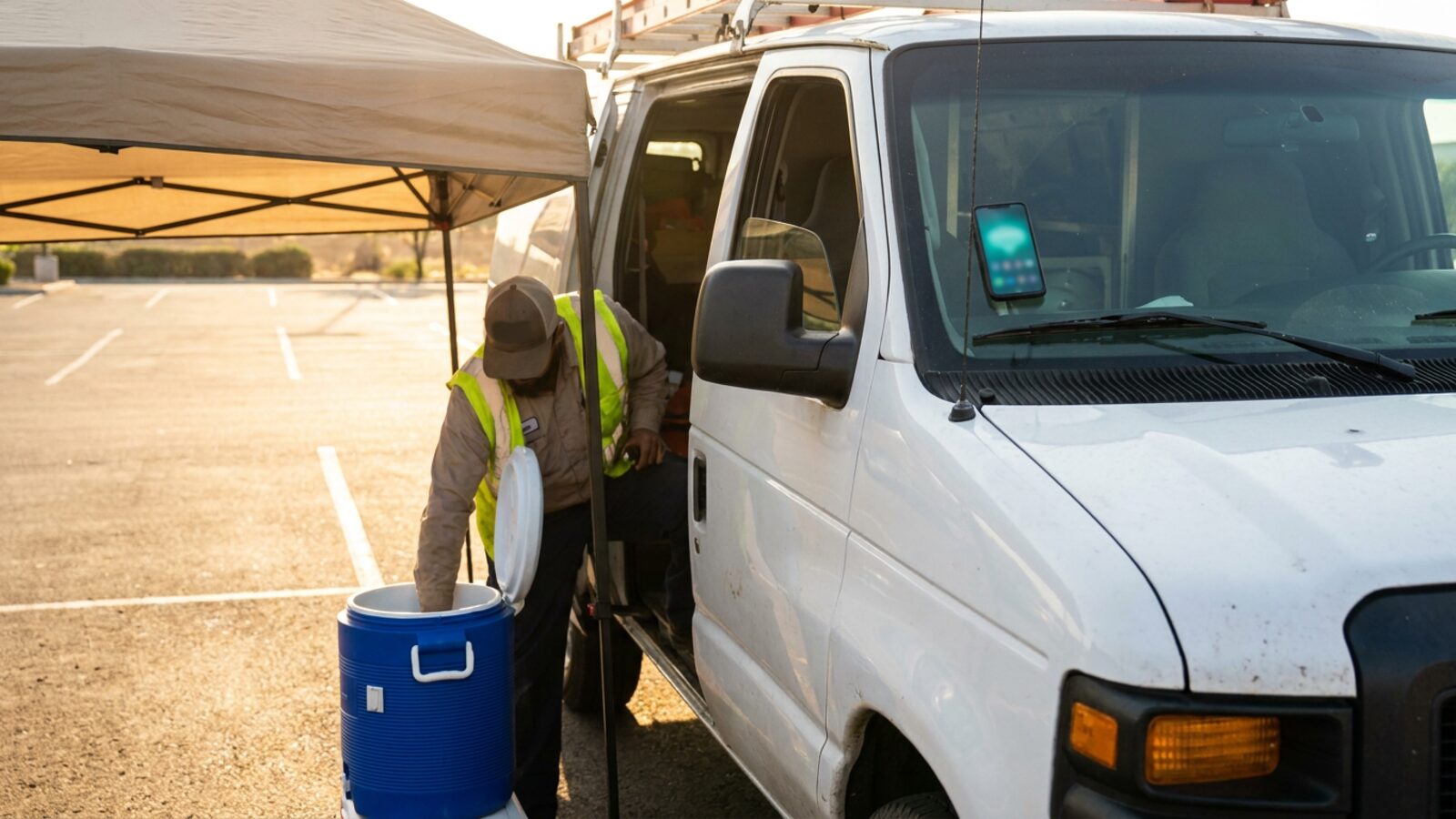
OSHA moved heat from guidance to proposed regulation in August 2024, and outdoor contractors still face the same two requirements: documentation that holds up and enforcement that happens in the field. The Bureau of Labor Statistics recorded 43 work-related deaths from environmental heat exposure in 2019, and OSHA reports that 50 to 70 percent of outdoor heat fatalities happen in a worker’s first few days on the job. Schedule dates still have to land while your tradespeople stay out of the hospital.
A printed manual in the glovebox of a fleet truck does not get you there. Compliance lives in your scheduling, routing, and daily logs, or it does not exist.
This guide is an educational overview, not legal advice. Check your state plan and your own counsel before you finalize a written program.
Where Clipboard Safety Tracking Breaks Down
Paper checklists put risk straight into your daily operations. A supervisor covering four job sites cannot watch every technician for a full shift. That gap becomes your safety record.
Acclimatization Records for New Hires
Onboarding in July draws the most scrutiny. Acclimatization means a graduated increase in exertion over seven to fourteen days, tracked per person.
A site manager should not have to guess whether a new technician finished that period. Inspectors want hours worked matched to the temperatures those hours happened in. Paper logs lose that detail, and missing records turn into citations.
Water and Rest Proof on Remote Sites
Field work spreads across miles of territory, far from any office. Nobody downtown can confirm that a crew two counties over has potable water and usable shade.
When an inspector asks for cooldown break logs, you produce them that day or you do not. Crews deep in physical labor forget to write breaks down. Automated prompts capture the break when it happens instead of at 5 p.m.
Temperature Triggers That Move During the Shift
A nine-hour shift does not hold one temperature. An 8 a.m. start can sit below every threshold while 3 p.m. triggers high-heat procedures.
The gap that hurts you is lag. Conditions change on a roof an hour before anyone at the office hears about it, and the office is where the rest-break call gets made. Asking crews to pull weather stations and recalculate the heat index takes them off the work.
Real-time heat index alerts close that lag. Dispatchers need localized conditions on the routing map, not group texts after the fact. Schedules that ignore an afternoon spike put people in the hospital and invite an inspection.
Manual Check-Ins Leave a Liability Gap
A check-in that depends on a technician remembering to send it is not evidence. When the worker sliding into early heat exhaustion is the same person responsible for reporting heat exhaustion, the system fails at the exact moment you need it.
Investigators read silence as absence. A missed manual check-in looks identical to a break that never happened, and you carry that ambiguity into the claim. Automated prompts and escalation timers take the judgment call away from a worker who is already impaired.
Training Seasonal Hires the Same Way Every Time
Summer brings a demand surge and a wave of seasonal hires. Safety orientation gets compressed into a ten-minute morning huddle so crews can roll out.
That version skips the early warning signs of heat exhaustion. Workers who cannot spot symptoms in themselves or a partner go from cramps to heat stroke fast.
Scaling that fast across a multilingual workforce compounds it. Every hire needs the same script for calling a rest break or an ambulance, in the language they think in, with a completion record per person rather than a sign-in sheet for the huddle.
State Standards and the Current OSHA Stance
Federal OSHA has no finalized heat standard. The agency published a Notice of Proposed Rulemaking on heat injury and illness prevention in August 2024, and it remains a proposal with no final date.
That does not mean federal inspectors sit out the summer. OSHA runs a National Emphasis Program on heat and cites employers for heat hazards under the General Duty Clause.
Seven states enforce their own heat rules: California, Colorado, Maryland, Minnesota, Nevada, Oregon, and Washington. Contractors working across state lines should build to the strictest rule they touch.
| State | Applies To | Key Triggers |
|---|---|---|
| California | Outdoor work sites, plus a separate indoor rule | Shade at 80 degrees Fahrenheit; high-heat procedures at 95 degrees |
| Colorado | Agricultural workers | Preventative measures at 80 degrees Fahrenheit |
| Maryland | Indoor and outdoor work | Heat index of 80 degrees Fahrenheit, with added steps at 90 degrees |
| Minnesota | Indoor workplaces | Limits that vary by physical workload classification |
| Nevada | Employers with more than 10 employees | Written program and job hazard analysis; no single temperature trigger |
| Oregon | Indoor and outdoor work | Heat index of 80 degrees Fahrenheit, with added steps at 90 degrees |
| Washington | Outdoor work environments | 80 degrees Fahrenheit year-round; 52 degrees for non-breathable clothing |
What Belongs in a Heat Illness Prevention Plan
A written plan sets one expectation for the whole workforce. Use the outline below as the foundation for your own document, then treat every item as a daily operating requirement.
1. Water Provision and Access
Provide cool, potable drinking water at no cost. Plan for one quart per employee per hour across the full shift, and keep the source as close to the active work area as practicable.
Stations need daily sanitation and frequent refills. Supervisors push hydration on a schedule instead of waiting for thirst.
2. Shade and Cooling Areas
Designated shade becomes mandatory once temperatures cross your state trigger. The area has to hold everyone on rest at the same time and let them sit upright, fully out of direct sun.
A truck cab counts only with the air conditioning running and the vehicle parked. Mobile crews carry portable canopies and set them up at every stop.
3. Preventative Rest Breaks
Any worker who feels overheated takes a cooldown rest. California sets that break at a minimum of five minutes, separate from meal periods, and Oregon adds ten minutes of rest every two hours once high-heat triggers hit.
Never penalize a technician for using protected cooldown time. Logging the interval is what proves you enforce the policy.
4. Acclimatization Procedures
New employees and anyone back from an extended absence carry the highest heat stroke risk. Watch them closely for the first fourteen days and raise workload in steps across that window.
Pair new hires with experienced technicians who know what distress looks like.
5. Training and Communication
Train supervisors and field staff before they work in significant heat. Cover the signs of heat stress, your reporting chain, and personal risk factors such as medication and prior illness.
Deliver the material in the primary language of the crew. Short toolbox talks keep it current through the season.
6. Emergency Response Protocols
Every site needs a written access route and a working way to call for help. Supervisors carry a device that reaches emergency services from the back of a job site, not just the parking lot.
Spell out how to cool a worker while responders are en route. Fast cooling drives survival in heat stroke cases, so name the responsible person before the emergency.
7. Environmental Monitoring
Track local temperature and heat index through the work day, not once at the 7 a.m. huddle. Assign one person to check forecasts and current conditions across every service territory.
That reading decides when high-heat protocols start. IoT environmental sensors at fixed sites and weather feeds for mobile crews report conditions per job site, which a single shop thermometer cannot do. Predictive heat stress monitoring goes one step further and flags the window before a threshold is crossed, while you can still move the work.
How AI-Driven Dispatch and Compliance Automation Enforce the Plan
A written plan turns into action inside the tools your crews already carry. AI-driven dispatch and compliance automation put each step into the technician’s mobile workflow, so the record builds itself. Wiring those steps into your field service platform keeps the data accurate and auditable.
Weather API integration for contractors is what makes predictive safety routing possible. Pull localized forecasts into the routing logic and the heavy manual work lands in the cooler morning window before the schedule is published, instead of getting reshuffled at noon.
- Threshold alerts: crew leaders get notified the moment local conditions hit a regulatory trigger, and the app holds an acknowledgement on the technician’s device.
- Blocked job status: the next stage will not open until the required water and rest breaks are signed off, which produces a timestamped record instead of a recollection.
- Escalating check-ins: the technician confirms on screen at set intervals during high-heat conditions, and a missed confirmation escalates to the safety manager within minutes.
- Acclimatization clocks: automated compliance tracking counts each new hire’s graduated days against the hours and temperatures actually worked.
Construction contractors running crews across scattered sites get the most out of that escalation. Automated OSHA compliance software also holds the training record, the break log, and the acclimatization clock in one place, so an inspection request becomes an export rather than a week of digging through binders.
Build the Plan Before the First 95-Degree Week
Your records have to survive an inspection without burying field managers in paperwork. Cloud-based business intelligence systems set up before the first 95-degree week cost far less than a citation, and they cut the turnover that follows a bad summer.
Brixx Digital builds custom portals and compliance software that log safety metrics in the background of work your crews already do. Start with the free health diagnostic and map the daily workflow that keeps your tradespeople safe and your company covered.
A heat plan only works if the crew actually sees the alert and the office can prove it. We build heat-index alerts, check-ins and acknowledgement logs into the dispatch app for HVAC companies and other trades, as part of our field service systems.
Frequently Asked Questions (FAQs)
Does federal OSHA have a finalized heat standard?
No. OSHA published a Notice of Proposed Rulemaking in August 2024, and it is still a proposal with no final date. Federal inspectors continue to cite heat hazards under the General Duty Clause and work a National Emphasis Program on heat.
Which states have their own heat illness regulations?
California, Colorado, Maryland, Minnesota, Nevada, Oregon, and Washington. Each sets its own triggers for rest breaks, shade, water, and acclimatization tracking, so multi-state contractors should build to the strictest one they touch.
At what temperature do state heat rules kick in?
Most state rules begin near 80 degrees Fahrenheit and add stricter requirements at 90 or 95 degrees. Washington drops as low as 52 degrees for crews wearing non-breathable protective clothing.
How long does acclimatization take for a new worker?
Plan on seven to fourteen days of graduated exertion. OSHA guidance calls for close observation through the first 14 days, with workload rising in steps rather than a full shift on day one.
How does automated compliance software prevent OSHA heat citations?
It removes the two failures inspectors look for: missing records and breaks nobody enforced. The software tracks the heat index per job site from weather and sensor data, pushes real-time alerts the moment a trigger hits, and holds the next job status until water and rest breaks are acknowledged on the phone. What you hand an inspector is a timestamped audit trail instead of a supervisor’s recollection.